Businesses should promote inclusive growth and equitable development
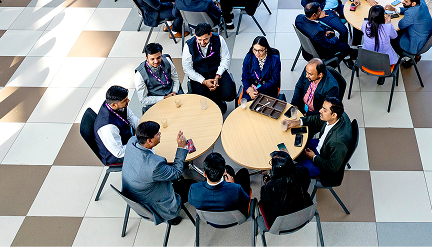
We are committed to fostering an inclusive culture where every voice is valued and respected. Our approach promotes a workplace that celebrates diversity and ensures fair and equitable access to opportunities for all. By aligning our initiatives with broader societal goals—such as reducing inequality and equipping people for the future of work—we create meaningful, large-scale impact. Through these efforts, we contribute to resilient communities and support sustainable, inclusive economic growth.
UN SDGs
25.63% of all goods, services directly sourced from MSMEs / small producers
93.8% of all goods, services directly sourced from within India
1.69 Crore CSR Spent in Aspirational Districts.
Zero Projects undertaken required Rehabilitation and Resettlement
Essential Indicators
| Name and brief details of project | Date of notification | Whether conducted by independent external agency (Yes/No) | Results communicated in public domain (Yes / No) | Relevant Web link |
|---|---|---|---|---|
|
Social Impact Assessment is a part of EIA for getting Environment Clearance for projects. All projects listed in Question No. 12 of Principle 6 have SIA components in-built as part of the study carried out. In addition, impact assessment of the CSR projects is an ongoing process at ACC, that continues to assess social impacts using platforms such as regular interaction with the communities for project implementation and monitoring, Community Advisory Panel (CAP) as well as the regular impact assessment at the maturity of the projects implemented across various thematic areas and geographies under operation. Any social impact emerging of these platforms is seriously considered and factored into annual workplan and activities of Adani Foundation. |
||||
| Sr. No. | Name of Project for which R&R is ongoing | State | District | No. of Project Affected Families (PAFs) | % of PAFs covered by R&R | Amounts paid to PAFs in the FY (In INR) |
|---|---|---|---|---|---|---|
|
Nil |
||||||
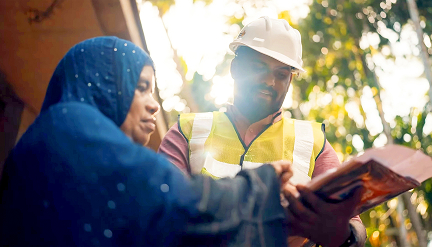
The Community Advisory Panel (CAP) is a formal forum where multi stakeholder meetings including community representatives, plant management and other local stakeholders participate regularly. Concerns if any from the community are shared in this forum. The same is then discussed in CSR committee meeting at the plant between plant management and CSR team. The actions are planned and executed by the CSR team under the guidance of plant management. Besides this, regular interaction and feedback from the community are documented and taken care off by the CSR team.
| FY 2025-26 (Current Financial Year) |
FY 2024-25 (Previous Financial Year) |
|
|---|---|---|
| Directly sourced from MSMEs/ small producers | 25.63% | 23.25% |
| Directly from within India | 93.86% | 96.62% |
| FY 2025-26 (Current Financial Year) |
FY 2024-25 (Previous Financial Year) |
|
|---|---|---|
| Rural | 35.63% | 58.98% |
| Semi-urban | 30.38% | 10.26% |
| Urban | 16.13% | 24.45% |
| Metropolitan | 17.85% | 6.31% |
Note: Place to be categorised as per RBI Classification System – rural/semi-urban/urban/metropolitan
Leadership Indicators
| Details of negative social impact identified | Corrective action taken |
|---|---|
|
Nil |
Nil |
| Sr. No. | State | Aspirational District | Amount spent (In INR) |
|---|---|---|---|
1 |
Jharkhand |
West Singhbhum (Chaibasa) | 1.69 Cr. |
– No
(b) From which marginalized /vulnerable groups do you procure?
– Not Applicable
(c) What percentage of total procurement (by value) does it constitute?
– Not Applicable
| Sr. No. | Intellectual Property based on traditional knowledge | Owned/ Acquired (Yes/No) | Benefit shared (Yes / No) | Basis of calculating benefit share |
|---|---|---|---|---|
| Not applicable – The Company is in the business of cement manufacturing and has not derived or shared any benefits from intellectual properties based on traditional knowledge. |
||||
| Name of authority | Brief of the Case | Corrective action taken |
|---|---|---|
| Not applicable – The Company is in the business of cement manufacturing and has not derived or shared any benefits from intellectual properties based on traditional knowledge. |
||
| Sr. No. | CSR Project | No. of persons benefitted from CSR Projects | % of beneficiaries from vulnerable and marginalised groups |
|---|---|---|---|
1. |
Project on Health, Education, Sustainable Livelihood Development, Community Development and Climate Action | 21,000 (Chaibasa) | 80-85% |
General Disclosures
Management Process and Disclosures

Businesses should conduct and govern themselves with integrity, and in a manner that is Ethical, Transparent and Accountable
Businesses should provide goods and services in a manner that is sustainable and safe
Businesses should respect and promote the well-being of all employees, including those in their value chains
Businesses should respect the interests of and be responsive to all its stakeholders
Businesses should respect and promote human rights

Businesses should respect and make efforts to protect and restore the environment

Businesses, when engaging in influencing public and regulatory policy, should do so in a manner that is responsible and transparent